
Phone
Consultations Available
50+ Years
Combined Experience
Hundreds of Cases
Successfully Resolved
Millions Recovered
On Behalf of Clients
If you rent your home, your lease contains an “implied warranty of habitability.” Regardless of the actual language in your lease, the implied warranty of habitability requires your landlord to maintain the premises and make necessary repairs promptly. If you have been dealing with a problem in your home that is making your living situation unbearable, an experienced tenant attorney can help you hold your landlord accountable.
At Wolford Wayne LLP, we represent tenants in disputes that arise out of a landlord’s failure to repair and maintain their apartment or home. In California, a landlord has a duty to provide their tenants with safe, sanitary housing. To schedule your consultation with a San Francisco failure to repair or maintain lawyer, reach out to our office today.
Common Repair Issues
Our San Francisco lawyers typically handle cases involving the following failure to repair or maintain issues:
- Bedbug, rodent, and other pest infestations
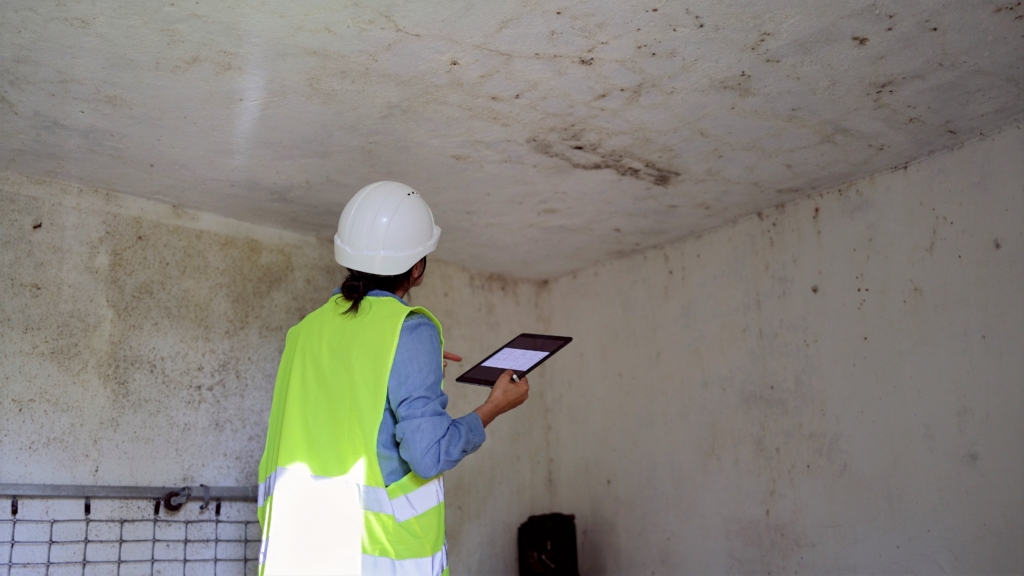
- Severe Mold issues
- Lack of heat
- Lead or asbestos issues
- Faulty electrical systems
- Broken windows, damaged walls or other dilapidated conditions
- Dangerous wiring
- Severe Water leaks
- Dangerous stairwells or broken stairs
Unfortunately, while they are obligated to respond to repair requests straight away, landlords do not always follow the law. If you are a tenant living with longstanding or severe habitability issues, you may have grounds to recover money from your landlord. The best approach will depend on the facts of your situation.
Tenants dealing with substandard living conditions may have grounds to take legal action against their landlord through:
- Filing a Rent Board Petition
- Suing for breach of habitability
- Moving out and suing for constructive eviction
If you are being forced out of your rental unit, our team can help you file a constructive eviction claim for compensation. Constructive eviction occurs when you can no longer live in a rental unit because the conditions make it unsafe or uninhabitable. Failure to maintain cases typically coincide with constructive eviction when severe habitability concerns affect an individual’s ability to remain in their home.
What Are Your Landlord’s Specific Obligations?
Both State and local laws require landlords to make repairs and maintain a rental unit in usable condition.
Under state law, California Civil Code §1941.1 lists multiple requirements that a landlord must meet for a property to be considered habitable. If there is any problem with one of the required features or services, the landlord must make prompt repairs. The only exception is if the damage or unsafe condition was caused by the tenant currently inhabiting the property. Learn more about the protections available to tenants during your initial consultation with a failure to maintain or repair attorney in San Francisco.
California Civil Code Section 1941.1 Provides as Follows:
(a) A dwelling shall be deemed untenantable for purposes of Section 1941 if it substantially lacks any of the following affirmative standard characteristics or is a residential unit described in Section 17920.3 or 17920.10 of the Health and Safety Code:
(1) Effective waterproofing and weather protection of roof and exterior walls, including unbroken windows and doors.
(2) Plumbing or gas facilities that conformed to applicable law in effect at the time of installation, maintained in good working order.
(3) A water supply approved under applicable law that is under the control of the tenant, capable of producing hot and cold running water, or a system that is under the control of the landlord, that produces hot and cold running water, furnished to appropriate fixtures, and connected to a sewage disposal system approved under applicable law.
(4) Heating facilities that conformed with applicable law at the time of installation, maintained in good working order.
(5) Electrical lighting, with wiring and electrical equipment that conformed with applicable law at the time of installation, maintained in good working order.
(6) Building, grounds, and appurtenances at the time of the commencement of the lease or rental agreement, and all areas under control of the landlord, kept in every part clean, sanitary, and free from all accumulations of debris, filth, rubbish, garbage, rodents, and vermin.
(7) An adequate number of appropriate receptacles for garbage and rubbish, in clean condition and good repair at the time of the commencement of the lease or rental agreement, with the landlord providing appropriate serviceable receptacles thereafter and being responsible for the clean condition and good repair of the receptacles under his or her control.
(8) Floors, stairways, and railings maintained in good repair.
(9) A locking mail receptacle for each residential unit in a residential hotel, as required by Section 17958.3 of the Health and Safety Code. This subdivision shall become operative on July 1, 2008.
(b) Nothing in this section shall be interpreted to prohibit a tenant or owner of rental properties from qualifying for a utility energy savings assistance program, or any other program assistance, for heating or hot water system repairs or replacement, or a combination of heating and hot water system repairs or replacements, that would achieve energy savings.
Local Rent Ordinance Protections
37.10B SF Rent Ordinance Provides as Follows:
(a) No landlord, and no agent, contractor, subcontractor or employee of the landlord shall do any of the following in bad faith:
(1) Interrupt, terminate or fail to provide housing services required by contract or by State, County or local housing, health or safety laws;
(2) Fail to perform repairs and maintenance required by contract or by State, County or local housing, health or safety laws;
(3) Fail to exercise due diligence in completing repairs and maintenance once undertaken or fail to follow appropriate industry repair, containment or remediation protocols designed to minimize exposure to noise, dust, lead, paint, mold, asbestos, or other building materials with potentially harmful health impacts;
(4) Abuse the landlord’s right of access into a rental housing unit as that right is provided by law;
(5) Influence or attempt to influence a tenant to vacate a rental housing unit through fraud, intimidation or coercion; for example and without limitation, by endeavoring to recover possession of a rental unit that is exempt from rent increase limitations under Section 37.3(d) or Section 37.3(g) by means of a rent increase that is imposed with an intent to defraud, intimidate, or coerce the tenant into vacating the rental unit in circumvention of Section 37.9(a), 37.9A, 37.9B, or 37.9C, in which case evidence of bad faith may include but is not limited to the following: (1) the rent increase was substantially in excess of market rates for comparable units; (2) the rent increase was within six months after an attempt to recover possession of the unit; and (3) such other factors as a court or the Rent Board may deem relevant;
(6) Attempt to coerce the tenant to vacate with offer(s) of payments to vacate which are accompanied with threats or intimidation;
(7) Continue to offer payments to vacate after tenant has notified the landlord in writing that they no longer wish to receive further offers of payments to vacate;
(8) Threaten the tenant, by word or gesture, with physical harm;
(9) Violate any law which prohibits discrimination based on actual or perceived race, gender, sexual preference, sexual orientation, ethnic background, nationality, place of birth, immigration or citizenship status, religion, age, parenthood, marriage, pregnancy, disability, AIDS or occupancy by a minor child;
(10) Interfere with a tenant’s right to quiet use and enjoyment of a rental housing unit as that right is defined by California law;
(11) Refuse to accept or acknowledge receipt of a tenant’s lawful rent payment;
(12) Refuse to cash a rent check for over 30 days;
(13) Interfere with a tenant’s right to privacy;
(14) Request information that violates a tenant’s right to privacy, including but not limited to residence or citizenship status or social security number;
(15) Other repeated acts or omissions of such significance as to substantially interfere with or disturb the comfort, repose, peace or quiet of any person lawfully entitled to occupancy of such dwelling unit and that cause, are likely to cause, or are intended to cause any person lawfully entitled to occupancy of a dwelling unit to vacate such dwelling unit or to surrender or waive any rights in relation to such occupancy.
(b) Nothing in this Section 37.10B shall be construed as to prevent the lawful eviction of a tenant by appropriate legal means.
(c) Enforcement and penalties.
(1) Rent Board. Violation of Sections 37.10B(a)(1) – (3) is a substantial and significant decrease in services as defined in Section 37.2(g) and tenants may file a petition with the Rent Board for a reduction in rent.
(2) Criminal Penalty. Any person who is convicted of violating this Section shall be guilty of a misdemeanor and upon conviction shall be punished by a fine of not greater than one thousand dollars or by imprisonment in the County Jail for not more than six months, or by both such fine and imprisonment.
(3) Civil Action. Any person, including the City, may enforce the provisions of this Section by means of a civil action. The burden of proof in such cases shall be preponderance of the evidence. A violation of this Chapter may be asserted as an affirmative defense in an unlawful detainer action.
(4) Injunction. Any person who commits an act, proposes to commit an act, or engages in any pattern and practice which violates this Section 37.10B may be enjoined therefrom by any court of competent jurisdiction. An action for injunction under this subsection may be brought by an aggrieved person, by the City Attorney, or by any person or entity who will fairly and adequately represent the interest of the protected class.
(5) Penalties and Other Monetary Awards. Any person who violates or aids or incites another person to violate the provisions of this Section is liable for each and every such offense for money damages of not less than three times actual damages suffered by an aggrieved party (including damages for mental or emotional distress), or for statutory damages in the sum of one thousand dollars, whichever is greater, and whatever other relief the court deems appropriate. In the case of an award of damages for mental or emotional distress, said award shall only be trebled if the trier of fact finds that the landlord acted in knowing violation of or in reckless disregard of Section 37.9, 37.10A, or 37.10B herein. In addition, a prevailing plaintiff shall be entitled to reasonable attorney’s fees and costs pursuant to order of the court. The trier of fact may also award punitive damages to any plaintiff, including the City, in a proper case as defined by Civil Code Section 3294. The remedies available under this Section shall be in addition to any other existing remedies which may be available to the tenant or the City.
(6) Defending Eviction Lawsuits. In any action to recover possession of a rental unit subject to the Chapter, unless the sole basis of the notice to quit is Section 37.9(b), the court shall award the tenant reasonable attorney fees and costs incurred in defending the action upon a finding that the tenant is the prevailing party under Code of Civil Procedure Section 1032(a)(4).
(d) Severability. If any provision or clause of this Section 37.10B, or Section 37.2(g), or the application thereof to any person or circumstance is held to be unconstitutional or to be otherwise invalid by any court of competent jurisdiction, such invalidity shall not affect other provisions of this Section 37.10B or Section 37.2(g) and all clauses of these Sections are declared to be severable.
How Do You Prove Your Case?
If you are dealing with substantial defective conditions it is critical to start by notifying your landlord in writing about the condition, the need for repair or maintenance, and the way it affects how you live in the space.
Keep copies of all correspondence between you and the landlord or property manager about these issues. Take pictures of the damage or condition with a date stamp, and keep notes tracking:
- The date the problem started
- Details about the hazardous condition and dated descriptions if the conditions worsens over time
- Verbal conversations you had with utility companies, other tenants, the landlord or property manager about the issue
- Any actions taken by anyone to fix the problem
Be sure to keep copies of your lease and rent payment records as well as all written communication relevant to the issue, including letters, emails, and text messages.
Our San Francisco attorneys can use this evidence to support a claim that your landlord neglected to conduct necessary maintenance or make repairs. Regardless of the type of action you take against your landlord, you will need clear evidence to support your case.
If your landlord refuses or delays necessary maintenance and repairs, contact an experienced tenant rights attorney to discuss your options and next steps. Options may include contacting and filing a complaint with the local building department, filing a petition for a decrease in services at the rent board or getting a lawyer involved and even filing a lawsuit to pursue compensation. As each situation is different it is important to discuss your options with an attorney to discuss what is best for you.
Work With Our San Francisco Attorneys If Your Landlord Neglects Repairs and Maintenance
A landlord has a duty to provide you with the basic necessities that make a home safe and livable. If your landlord is neglecting their duties, take action with a San Francisco failure to repair or maintain lawyer.
Contact our team at Wolford Wayne LLP for help. Our experienced attorneys can review your situation, advise you about the most effective action in your circumstances, and help you resolve the issue.